
The Rule of Thumb
If you have to fight your garage door — pulling it closed, pushing it up, or babysitting it halfway — the spring has already started losing its battle with gravity. A healthy spring does its job so quietly you forget it's there.
There are a few exceptions worth knowing before you panic. A brand-new door or opener can feel stiff for the first week or two while everything seats in. And during Sebastian's humid stretches, a wood or composite door can swell slightly and drag on the tracks, which mimics spring trouble without being a spring problem at all. The checklist below helps you tell the difference.
The Garage Spring Checklist
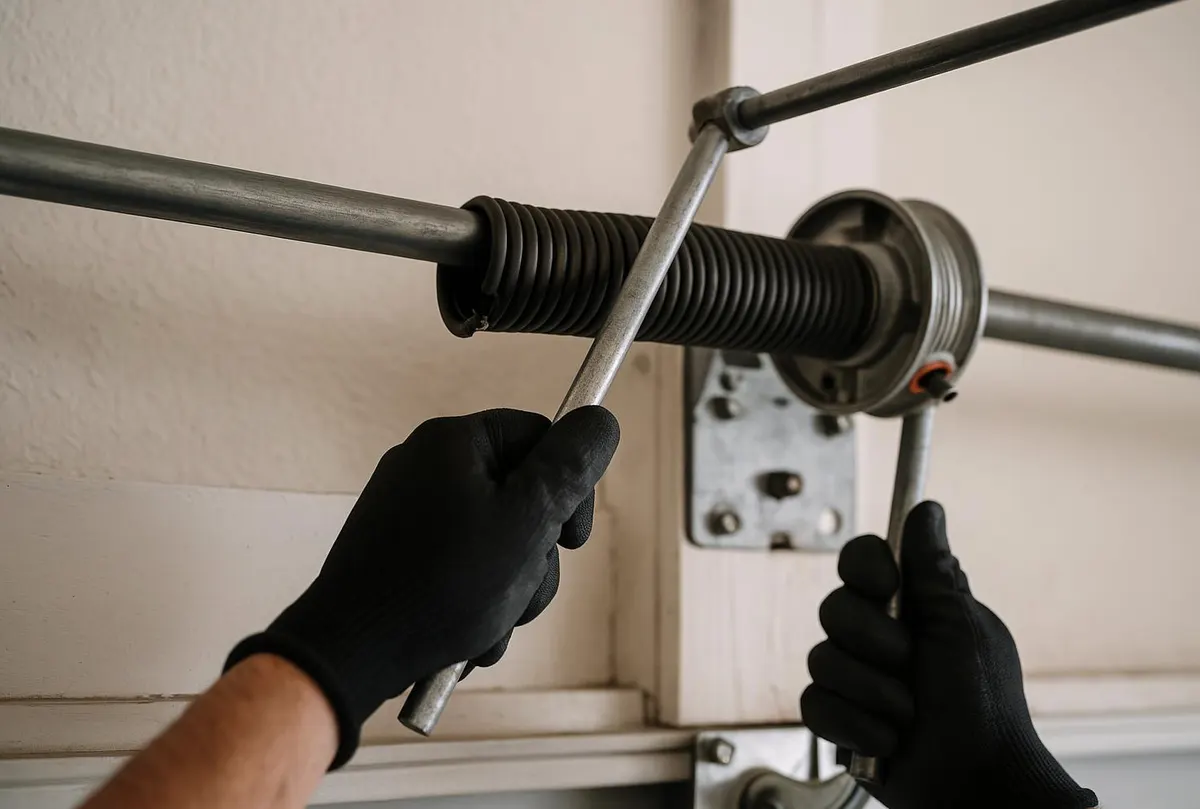
- Look for a visible gap in the coil. Torsion springs sit above the door on a metal shaft. If you see a clean gap in the coil — even a small one — the spring has already broken. Do not operate the door; the opener will be lifting far more weight than it's built for.
- Run the balance test. Pull the emergency release cord to disconnect the opener, then lift the door by hand to about waist height and let go. It should stay put. If it crashes down or jerks upward on its own, spring tension is off and the opener is compensating — which wears it out faster too.
- Listen for a bang. A loud pop, often when nobody's touching the door, is almost always a spring letting go. It can happen any time of day but shows up more often after repeated storm-prep cycles during hurricane season, when the door gets opened and closed far more than usual.
- Check for rust on the coils. Salt air drifting in off the coast settles on exposed metal, and springs are no exception. Rust doesn't just look bad — it pits the metal and makes the coil stretch unevenly, which is exactly how one side fails before the other.
- Watch the opener work harder than it used to. If the motor strains, groans, or the door reverses partway up, the spring isn't carrying its share of the weight anymore and the opener is taking the hit. Left alone, this burns out gears or the motor itself.
- Compare the cables on extension-spring setups. Walk to each side of the door and look at the cables running from the bottom bracket up to the pulley. If one side looks slack, frayed, or the spring has stretched noticeably longer than the other, that side is close to giving out.
- Stand back and check if the door hangs level. A door that looks crooked, lower on one side, or doesn't sit flush on the floor usually means one torsion spring has lost tension while the other is still holding. It's a mismatch waiting to become a full failure.
Why This Matters More Here
Garage door springs are rated for a set number of open-close cycles, and homes near the coast put extra strain on that lifespan two ways: moisture and swelling keep the door working a little harder on every cycle, and salt air accelerates rust on exposed coils faster than it would inland. Add in a hurricane season that pushes you to open and close the door more often for storm prep, and springs here tend to show wear sooner than the manufacturer's average suggests.
When to Call Sebastian Garage Door Experts
If you spot a coil gap, a crooked door, or rust creeping into the metal, stop opening and closing the door and call us. Garage door springs are under heavy tension and not a safe DIY fix — a spring that lets go while someone's hands are near it can cause real injury.
Our Garage Door Spring Repair service includes a full balance check, inspection of both springs (we replace them as a matched pair, since one that's already stressed will fail soon after its twin), and a look at the cables and rollers while we're in there. If your springs are holding but you just want to get ahead of coastal wear before the next storm cycle, our Garage Door Maintenance & Tune-Up covers lubrication, rust checks, and tension adjustments so small issues don't turn into a 2 a.m. bang.
If any of the signs above sound familiar, call Sebastian Garage Door Experts today — we serve Sebastian, Vero Beach, Fellsmere, Roseland, Micco, Barefoot Bay, Palm Bay, and Melbourne, and we'll get your door balanced and safe before it fails on its own terms.