
The Short Answer
The landlord owns the garage door system — the springs, the opener, the tracks, the panels — the same way they own the roof and the water heater. The tenant is responsible for damage they cause through misuse or neglect, and for basic day-to-day care like keeping the track clear and reporting problems quickly instead of letting them get worse. If the lease is silent on garage doors, this is the default most property managers and small-claims judges fall back on. Now here's why.
The General Rule, and Why It Makes Sense
A garage door is a mechanical system with a limited lifespan, not a fixture a tenant can be expected to maintain like they would a faucet aerator. Torsion springs wear out from cycle count, not abuse. Openers fail from age and humidity. Rollers corrode near the coast. None of that is the tenant's fault, so none of it should be the tenant's bill — assuming the landlord has been doing basic upkeep.
Tenant-caused damage is a different category: backing a car into the door, forcing it closed when it's off track, letting kids hang on the bottom panel, or ignoring an obvious problem until it turns into a bigger one. If a tenant reports a grinding noise and the landlord does nothing for three months until the opener motor burns out, that's on the landlord. If the tenant never mentions it and the door eventually falls off the track, that's a harder conversation — and exactly the kind of thing a written move-in condition report settles instantly instead of turning into a he-said-she-said.
What Counts as Normal Wear vs. Tenant Damage
- Landlord's side: spring failure from age, opener motor burnout, rusted hinges or tracks from coastal salt air, weatherstripping that's cracked and shrunk from sun and heat, panels that have warped from humidity swelling.
- Tenant's side: a dented panel from a car bumper, a bent track from forcing the door past an obstruction, a broken cable from DIY repair attempts, missing remotes, or damage from ignoring a reported issue until it compounds.
- Gray area that needs a lease clause: battery replacement in keypads/remotes, lubrication and basic maintenance, and who calls for service when something stops working mid-lease.
The Move-In Walkthrough: What to Inspect Together
Do this with both parties present, phone cameras out, before keys change hands.
- Open and close the door manually (disconnect the opener first) and listen for grinding, scraping, or resistance. It should move smoothly with one hand.
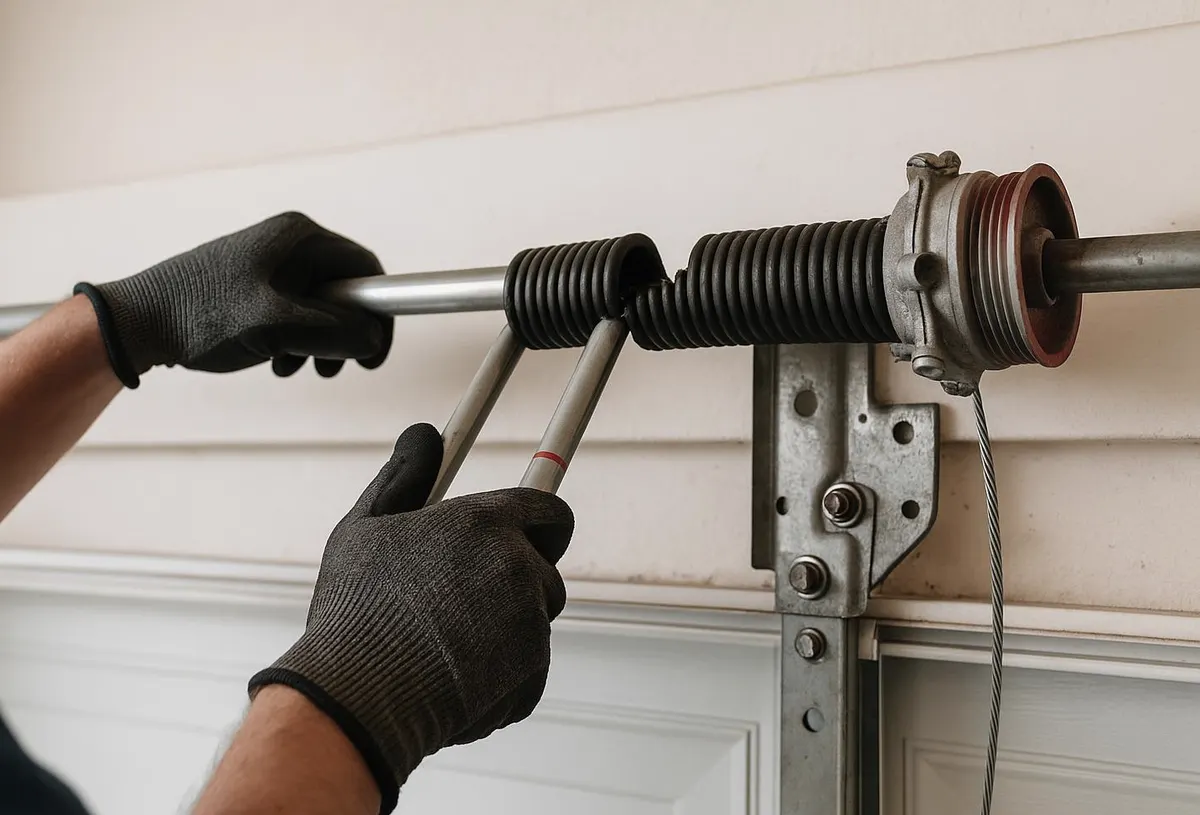
- Check the springs. Torsion springs sit on a bar above the door; look for visible gaps in the coils, rust, or obvious stretching. Don't touch them — just photograph and note the condition.
- Test the opener with the wall button and remote. Confirm the auto-reverse safety sensors work by placing something in the door's path while it's closing.
- Look at rollers and tracks for rust, bent sections, or debris buildup — common near the coast where salt air speeds up corrosion.
- Inspect weatherstripping along the bottom and sides for cracking, gaps, or water staining, which points to past leaks during heavy rain.
- Photograph every panel for existing dents or cracks so nobody gets blamed for damage that was already there.
- Confirm remotes and keypad codes work and get a count of how many remotes are being handed over.
Put the results in writing, both parties sign or initial it, and attach the photos. This single document ends 90% of garage door arguments before they start.
Why This Argument Comes Up More Often Here
Garage doors on the Treasure Coast take a harder beating than they would inland. Hot, humid air swells wood-composite panels and door frames, afternoon downpours work their way into worn weatherstripping, and salt air near the coast accelerates rust on springs, tracks, and hardware faster than most tenants or landlords expect. Hurricane season adds another layer: wind-load rated doors and their reinforcement hardware need periodic checks, and a tenant has no way to know if a door's wind rating is still intact after a storm unless someone tells them. All of this means components fail on a shorter timeline here than in drier climates — which is exactly why it matters whose column the repair bill lands in.
Put It In Writing
Add two sentences to the lease: who's responsible for routine maintenance (lubrication, track clearing, battery changes) and who's responsible for repairs beyond that, plus a requirement that tenants report problems within a set number of days of noticing them. That last part protects landlords from a minor issue turning into spring failure or an opener burnout from being ignored.
When to Call Sebastian Garage Door Experts
Whether you're the landlord trying to document pre-existing condition or the homeowner settling a dispute before a new tenant moves in, a professional inspection removes the guesswork. We can run a full Garage Door Maintenance & Tune-Up at move-in or move-out, documenting spring tension, opener function, track alignment, and weatherstripping condition in writing — so there's a neutral third-party record instead of two people arguing over memory. If something's already failing, our Cable & Roller Replacement service gets it handled fast, before a tenant's minor complaint becomes a liability.
If you're a Sebastian, FL homeowner dealing with a rental property dispute or just want peace of mind before new tenants move in, call Sebastian Garage Door Experts for a straightforward inspection and a written report you can actually use.