
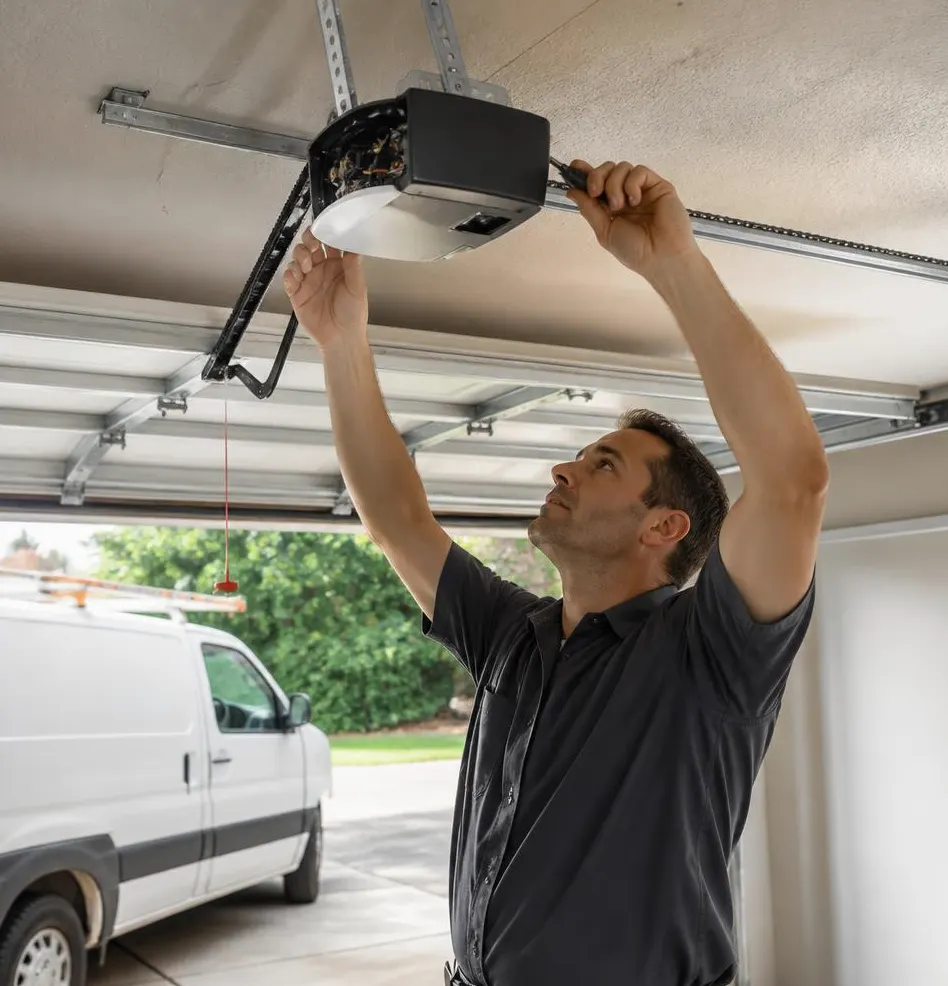
Short answer: most home inspectors check that the door opens and closes, not whether it's safe, code-ready, or built for coastal weather
A standard home inspection usually covers the basics: does the door go up, does it go down, is there an opener. That leaves out the parts that actually cost money later — spring condition, wind-load rating, hidden rust from salt air, and whether the door will hold up through hurricane season. If you're buying a home on the Treasure Coast, walk the garage yourself with this list before you sign anything.
What to check in the garage, item by item
1. Spring type and visible wear
Look up at the horizontal bar above the door for torsion springs, or alongside the tracks for extension springs. Rust, gaps between coils, or a spring that looks stretched out of shape means it's near the end of its life. A failed spring makes the door unsafe to lift by hand and is one of the most common reasons for an after-move-in service call.
2. The wind-load or impact rating label
Check the inside of the door for a manufacturer's sticker listing a wind-load rating or impact rating. Many older doors in this area were installed before wind-load codes tightened for coastal counties, and a door without a rated label may not hold up in a tropical storm or hurricane. This matters more here than almost anywhere else in the state, and it's rarely checked on a general home inspection.
3. Track alignment and base rust
Run your eyes down both tracks from top to bottom. They should be parallel with no visible bends, gaps, or separation from the wall. Pay close attention to the bottom foot or two of each track — that's where splashback, humidity, and ground moisture cause rust first. A rusted or bent track section usually means the door has been running off-center for a while, which wears out rollers and openers faster.
4. Panel condition — rust, dents, and swelling
For steel doors, check low panels for bubbling paint or rust spots, especially near the bottom where water pools. For wood or composite doors, press gently on the lower panels; sponginess or visible swelling is a sign of moisture absorption, common in homes with high humidity exposure. Either issue is cosmetic now but turns into a structural panel replacement within a few years if ignored.
5. Cables and rollers
Look at the thin cables running alongside the springs down to the bottom corners of the door. Frayed strands or visible rust are a safety issue, not a convenience one — a snapped cable can let a heavy door drop fast. Rollers should be checked too: plastic rollers with cracks or metal rollers that are rusted or flat on one side mean rough, noisy operation is coming soon.
6. Bottom seal and weatherstripping
Crouch down and look at the rubber seal along the bottom edge of the door. Cracked, flattened, or missing weatherstripping lets in water during afternoon downpours and gives pests an easy way in. It's a cheap fix, but a missing seal after heavy rain is often the first sign of a garage floor with standing water problems.
7. Opener age and safety reversal
Find the opener's manufacture date, usually on a sticker on the motor housing. Units older than about 10–15 years may lack modern safety sensors. Test it: place a piece of wood flat on the ground where the door closes. The door should reverse immediately on contact. If it doesn't reverse, that's a safety failure that needs attention before anyone relies on the garage daily.
8. Door balance
With the opener disconnected (pull the red release cord), lift the door halfway by hand and let go. A properly balanced door stays in place. If it slams down or shoots up, the springs are miscalibrated for the door's weight — a problem an inspector's basic open-close test will never catch, since the opener motor masks it.
9. Interior moisture staining
Check the inside walls and ceiling of the garage near the door opening for water staining or mildew. This can point to water intrusion around the door frame during storms, which ties back to seals, flashing, or grading issues outside that are worth asking the seller about directly.
When it's time to call in Sebastian Garage Door Experts
If you find rusted springs, an unrated door, or a failed balance test, don't move forward with DIY fixes on a door you don't know the full history of. We can run a full Garage Door Maintenance & Tune-Up before or right after closing to catch what a walkthrough can't, and if the springs or cables are near failure, our Garage Door Spring Repair service gets that fixed safely rather than waiting for a snap. For doors without a current wind-load rating, we'll talk through replacement options built for Treasure Coast storm seasons.
If you're closing on a home in Sebastian, Vero Beach, Fellsmere, or anywhere nearby, give Sebastian Garage Door Experts a call before move-in day. We'll check the door properly, tell you straight what needs fixing now versus later, and get it handled before hurricane season tests it for you.